Adult Patients
To insure the best and smoothest sedation, the following forms below should be downloaded and read carefully and completely. If the forms have not been mailed to you, they may be printed and brought to the appointment. Please follow all instructions and guidelines carefully, any divergence will decrease the safety of the procedure.
For your convenience, the forms are available in Adobe Acrobat format. If necessary, you can download the Adobe Acrobat Reader at the bottom of this page.
Files
To download Adobe Acrobat Reader, click Get Adobe Reader icon, below:

Goint to sleep for dental treatment
Intravenous Anesthesia enables:
- Safe and controlled dental treatment
- No memory of any treatment
- Multiple appointments can be condensed into one session
- No emotional trauma from going to the Dentist
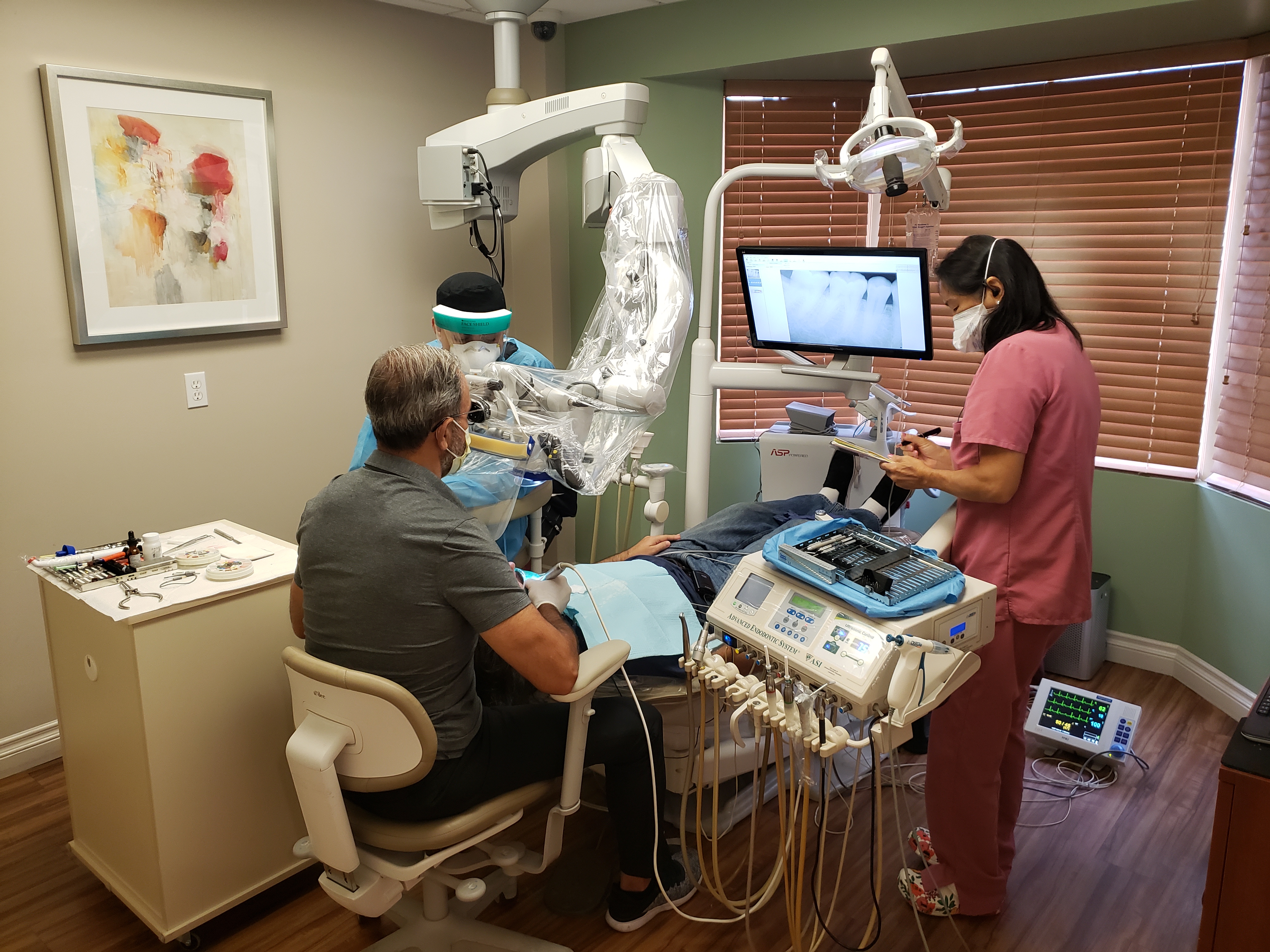
- Hospital like conditions and monitoring
--------------------------
Benefits of I. V. sedation / general anesthesia performed by the dental anesthesiologist
Benzodiazepines:
- Has a reversal agent (Flumazinil)
- Sedative and calming effects
- Metabolized by the Liver
- Relative safety if taken in overdose
A Dentist Anesthesiologist is a person who has completed Dental School and a Residency in Dental Anesthesia. There are currently 7 two-year programs in the country that offer this training. D. A. ’s trained in the two year programs not only have experience in sedating patients during dental procedures, but also have performed in a the hospital operating room setting for various dental and medical procedures. Our two years of training allows us to perfect and finesse the Sedation techniques to allow the patient to safely receive dental treatment. We are trained to prevent, recognize and treat any and all possible complication.
Oral Sedation is performed by any Dentist trained in techniques and complications of oral sedation. Although most oral medications are effective to help most people become sedated and less fearful, there is no way to accurately predict the specific effects. The dose of the oral medication is based on the average person. There is no “factoring in” of previous medication experiences (i. e. chronic use of pain medications), any history of decreased liver or kidney function, or cardiovascular status. The typical medication is administered 60 to 120 minutes prior to the procedure and the effects may last from 5 to 70 hours. The medication may have no effect, provide mild sedation, unexpected deep sedation or conversely, agitation. If it is your first time taking any oral medication to help you through your dental treatment, I strongly recommend that you arrive early and take it in the office so that any ill effects can be recognized and treated immediately.
I. V. Sedation/General Anesthesia is performed by a trained Dentist Anesthesiologist. After an Intra Venous line is established, medications are delivered through the line to the specific needs of the patient. The action of the medications is safe, immediate, accurate and predictable. The medications will be administered slowly and cautiously without any set dosing to allow the anesthesia to be specific to the needs of each individual patient. A great advantage is that there is no memory of the procedure. Multiple procedures and multiple appointments can be completed in one session without the risk of emotional trauma. Newly developed medications tailored for the needs of dental procedures make I. V. Sedation/General Anesthesia safer than ever before. With an Anesthesiologist experienced with working with all levels of sedation, the patient's dental treatment becomes effortless and without memory. The complexity and safety of the patient during the sedation is the responsibility of the Anesthesiologist and the Dentist is free to concentrate on the dental procedures. Efficiency increases and precision is achieved.
Monitoring and emergency equipment are always present for both types of procedures.
You are encouraged to ask questions. Please feel free.
Opioids:
- Has reversal agent (Naloxone)
- Euphoria & Analgesia (Pain Relief)
- Mild to Moderate depressive effects on Cardiovascular and Respiratory Systems
- Metabolized by the Liver
Morphine sulfate/ Morphine
- Releases Histamine
- Causes some Nausea/Vomiting
- Duration 2-7 hrs
- Causes Constipation
Fentanyl/Sublimaze
- Rapid onset
- Short duration 30-60 mins
- Cardiovascular Stability
- Repeated doses have the potential for cumulative effects including Respiratory Depression
- 75-125 times more potent than Morphine
Alfetanil/Alfenta
- Most rapid onset
- Most rapid elimination
- Moderate Cardiovascular and Respiratory Depression
- Repeated doses do no result in accumulation; rapid recovery and minimal post-operative respiratory depression
- 25 times more potent than Morphine
Sufentanil/Sufenta
- Prominent slowing of the Heart Rate
- Short duration 20-45 mins
- Moderate cardiovascular and Respiratory Depression
- 500-1000 times more potent than Morphine
- Repeated doses have the potential for cumulative effects including Respiratory Depression
Ketamine:
- Dissociative Anesthetic
- Rapid Onset 1-2 minutes
- Rapid Elimination 16-18 minutes
- Cardiac and Respiratory Stimulation
- Hypersalivation
- Amnesia
- Eyes remain open with eyes darting from side to side
- Intense Analgesia
- Increased skeletal Muscle Tone which helps maintain the airway
- Hypo-Allergenic
- Concurrent use of Benzodiazepines may reduce the incidence of Emergence Reactions
- Metabolized by the Liver
Propofol/Diprivan:
- General Anesthesia and Sedation
- Rapid onset 30-90 Seconds
- Elimination 30-60 minutes
- Rapid awakening. Awakening is more rapid and complete than with any other I. V. anesthetic
- Mild and Dose dependent depression of Cardiovascular and Respiratory Systems
- Repeated dosing has Minimal Cumulative Effects
- Painful on injection large vein preferred
- Decreased incidence of Nausea/Vomiting
- Metabolized by the Liver
References
Stoelting, R. K., Miller, R. D., Basics of Anesthesia 3rd Edition, 1994 pages 62-71.
Omoigui, S., The Anesthesia Drugs Handbook 2nd Edition, 1995 pages 4-338.
Various Handouts from Dental Anesthesia conferences.
latest news
- Really under During Surgery? Monitor Can Tell (opens in new window)
- American Dental Association News (opens in new window)
- American Academy of Pediatric Dentistry (opens in new window)
- Anesthesia Safety (opens in new window)
- Levels of Sedation (opens in new window)
- Sedation and Dentistry (opens in new window)
- I V sedation vs Oral sedation (opens in new window)
- More links >>>
Information and Links
Partners