For the Dental Office
In-office anesthesiology is ideal for:
- Fearful/Dental-phobic Adults
- Hyperactive Gag Reflex Symptoms
- Uncooperative Pediatric Patients
- Handicapped/Medically Compromised Patients
- Patients with Time Constraints who need Extensive
The level of sedation may be customized to the needs of the dentist and the desires of each patient within the familiar surroundings of your office.
A trained Anesthesiologist administering the sedation or general anesthesia relieves the Dentist from the added responsibilities of anesthesia and allows the Dentist to devote complete attention to the dental procedure.
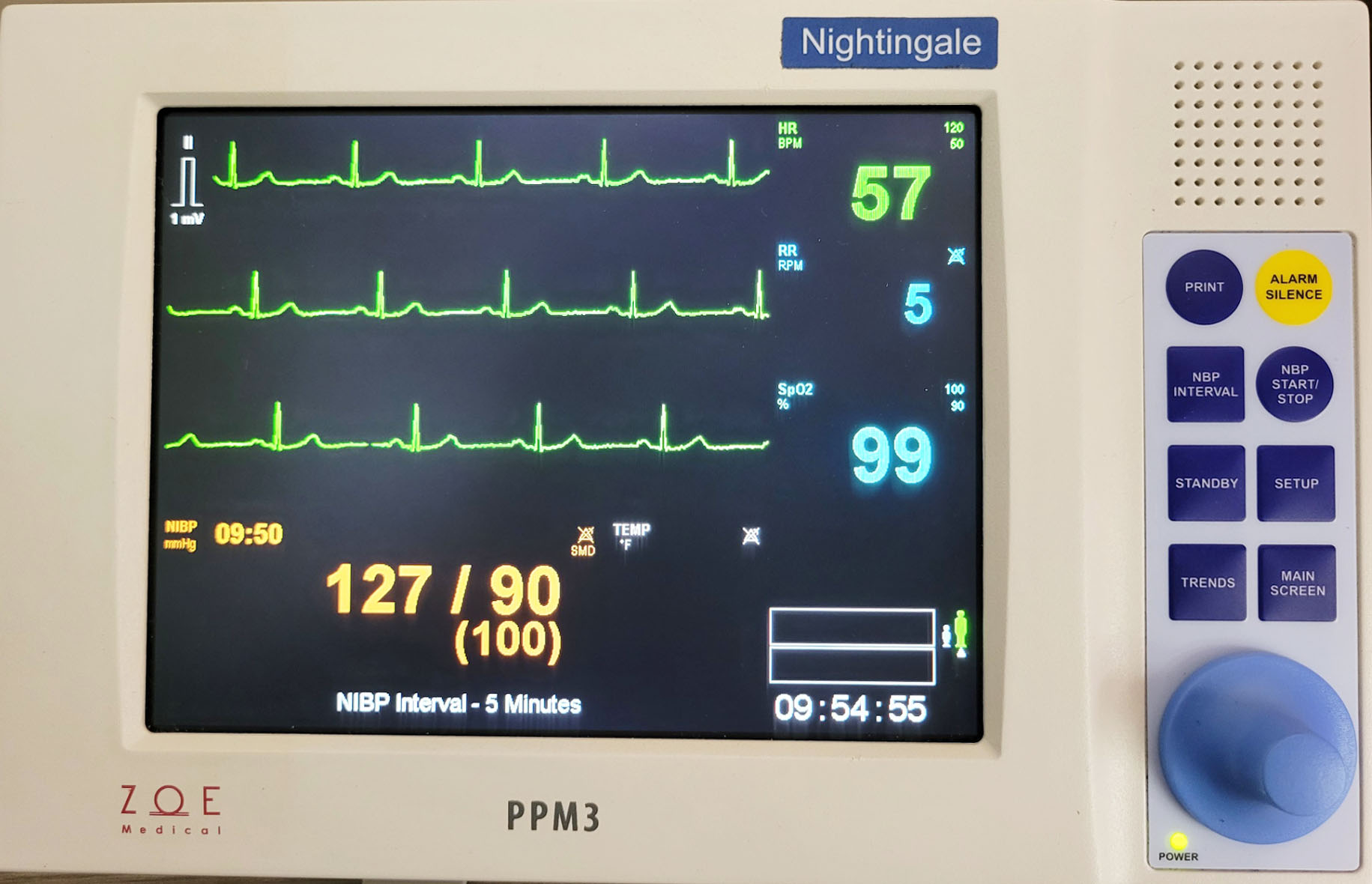
Safety is paramount during every procedure. All patients are vigilantly monitored with state of the art equipment including N. I. B. P. (Non-Invasive Blood Pressure), Pulse Oxymetry, E. K. G., and Precordial Stethoscope. Emergency equipment carried by the E. M. S. (Emergency Medical System) is brought to every Dental Office.
--------------------------
Pre-op instructions
- No Cold or Flu. Mucous congestion in the chest and lungs can endanger the safety because the sedated patient cannot clear their lungs by coughing.
- No Solids after midnight of the night before. The stomach must be empty. The medications can cause nausea and vomiting during the procedure can be fatal. Solids take 8 hours to clear the stomach.
- Clear liquids up to 4 hours prior. Water, Apple juice, Soda, Broth. You must be able to see through it. Clear liquids need 4 hours to clear the stomach. Does not include Milk or Orange juice.
- Be sure to discuss all health issues with Dr. Matsunaga. Some health issues may need to be investigated prior to the procedure. Dr. Matsunaga will discuss any concerns with their M. D. to ensure a safe procedure.
- OK to take morning Medications on schedule with only a sip of water. Many medications need a regular schedule for maintaining therapeutic levels. Check with Dr. Matsunaga.
- Loose fitting comfortable clothes with a short sleeve shirt. Short sleeves to enable direct skin contact of the blood pressure cuff and I. V.
- Must have a driver home and a responsible adult to supervise the recovery at home. In case of trouble, someone needs to be able to call for help.
- No nail polish on at least one finger or toe. The monitor to determine Oxygenation (adequate breathing) may be inaccurate with polish or acrylic nails.
- Recommend bringing a small blanket and favorite music. Many patients get cold during and after the sedation. Music is a great distraction.
- Ask questions and be comfortable with the procedure. I am always happy to answer all questions.
Patient selection
- Healthy Children Minimum of 2 years of age and 20 pounds
-
Acceptable medical conditions:
Autism
A. D. D. (Attention Deficit Disorder)
A. D. H. D. (Atten Deficit/ Hyperactive Disorder)
Mild Retardation
Mild Asthma: less than 1 episode per month
Speech Delay -
Unacceptable Medical Conditions:
Asthma requiring daily medication
Downs Syndrome
Cardiac conditions (except murmur that does not effect play stamina)
Cerebral Palsey - Cerebral Palsy patients who are unable to walk unassisted
--------------------------
Increasign the safety of office sedation
Sedation in the Dental office can benefit many patients. Fear, anxiety and the inability to achieve adequate local anesthesia are the most common obstacles. There are also the “gaggers” who eventually become fearful and anxious when there are so many fingers and instruments placed in the mouth. Some people are also unable to sit still or keep their mouth open for more than a few minutes.
Sedation will aid all of these patients.
The most common types of sedation in the office are oral
and I. V. Oral sedation can be pills or liquids. The most difficult
aspect of oral sedation that needs to be seriously considered
is the inconsistent absorbency of medications and thus unpredictable
effects. Medications taken orally are effected by the “First
Pass Phenomena.” The molecules first must survive the
acidic environment of the stomach and bile. The % of molecules
that remain intact is unpredictable and dependent on the specific
chemistry of the stomach at that particular moment. The intact
active molecules will then be absorbed by the venous system
of the stomach lining and transported directly to the liver.
The liver then metabolizes a large % of the molecules before
the remaining intact active medication has a chance to reach
the general circulation and C. N. S. to become effective. The duration
and depth of the medication’s effects is also unpredictable
since it is dependent on the activity of the stomach and the
liver. It is difficult if not impossible to adjust the duration
or level of sedation safely.
The most common issues with I. V. Sedation or General Anesthesia
are complications secondary to a laryngospasm. A laryngospasm
is a shutting of the Larynx (vocal cords) typically caused
by fluid (water, saliva or blood) irritation. It is critical
that no fluid is allowed passed the oral cavity. Suction,
Suction, Suction! A laryngospasm will prevent adequate respiration
and ventilation. Which can lead to hypoxia and eventually
bradycardia. There will be gauze placed at the back of the
mouth to help absorb any fluid that reaches the back of the
oral cavity. This gauze will be exchanged with a fresh one
when and if it becomes saturated.
To enable adequate access and visualization, a Bite Block
is recommended. The patient’s muscle control will be
weakened because they are sedated or asleep. The duration
of the procedures will probably exceed the mouth opening abilities
of even a cooperative patient. Treatment times are as short
as 1-2 hours or as long as 8 hours.
Supplemental oxygen will be administered to every patient.
Patients who are lightly sedated will receive the oxygen via
a nasal cannula under the nose. Patients who are asleep will
have a soft Nasopharyngeal tube inserted into the nose to
deliver the oxygen directly into the throat.
Antibiotic prophylaxis
I. V. Ampicillin: Adult 2.0 gram
Children 50 miligramg / kilogram
within 30 minutes prior
P. C. N. allergic: Clindamycin: Adult 600 miligram
Children 20 miligramg / kilogram
I. V. within 30 minutes prior
OR
Cefazolin: Adults 1.0 grma
Children 25 miligramg / kilogram
latest news
- Really under During Surgery? Monitor Can Tell (opens in new window)
- American Dental Association News (opens in new window)
- American Academy of Pediatric Dentistry (opens in new window)
- Anesthesia Safety (opens in new window)
- Levels of Sedation (opens in new window)
- Sedation and Dentistry (opens in new window)
- I V sedation vs Oral sedation (opens in new window)
- More links >>>
Information and Links
Partners